Why basic segmentation isn’t enough anymore
The shift to hyper-personalization
Today’s shoppers expect more than one-size-fits-all communication. Generic emails lose trust and fail to engage. Modern ecommerce needs hyper-targeted messaging that speaks to individual behavior, purchase history, and preferences. Harnessing more data leads to better relevance—and more conversions.
Why deeper segmentation works
As email tools evolve, so should your strategies. Data enricment, like behavioral patterns, transaction history, and predictive scoring, lets you build segments that align with customers’ real needs and timing. This isn’t just smarter marketing. It’s a trusted shopping experience.
Types of advanced segmentation every brand should master
RFM Segmentation: Recency, Frequency, Monetary
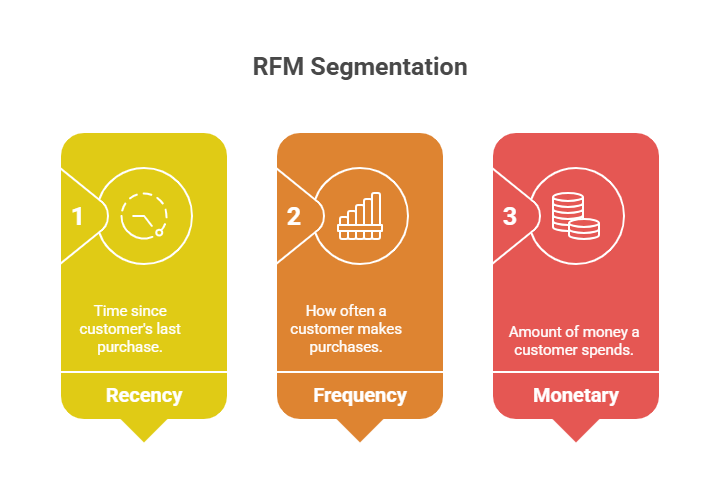
Group customers by:
- Recency: How long since their last purchase
- Frequency: How often they buy
- Monetary: How much they spend
Use Case:
- Identify VIPs (high on all three) for exclusive access
- Re-engage lapsed buyers with a personalized reminder
- Encourage repeat purchases among new buyers with relevant upsells
Predictive purchase modeling
Leverage tools like Klaviyo to anticipate future behavior, such as next order date or Customer Lifetime Value (CLV).
Email Marketing Tip: Trigger emails with personalized offers when predictive models flag high purchase intent—stimulating timely engagement.
Lifecycle scoring
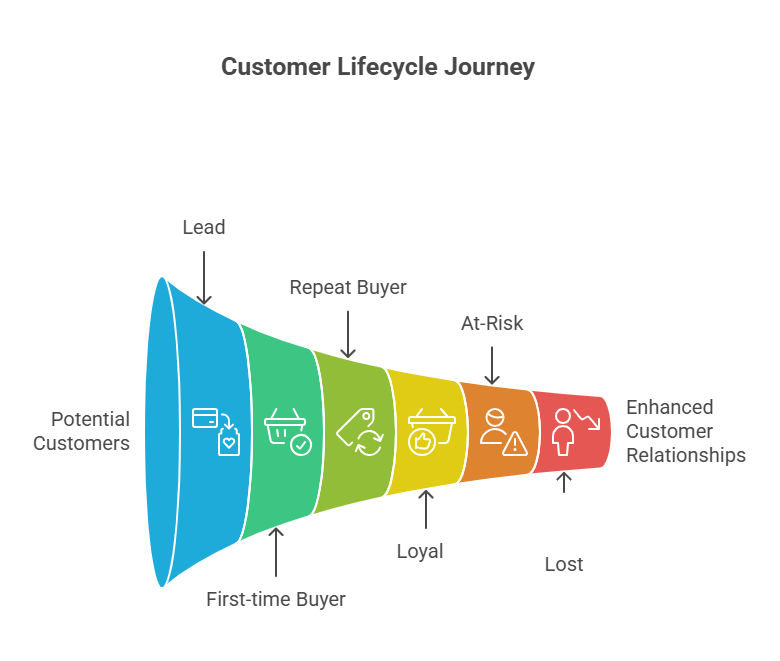
Assign customers a stage in their journey:
- Lead → First-time Buyer → Repeat Buyer → Loyal → At-Risk → Lost
Strategy:
Tailor flow content by stage—welcome series for new buyers, loyalty incentives for long-time customers, win-back flows for those at risk.
Engagement based grouping
Segment based on interactions:
- Highly Engaged: Opened or clicked 3+ recent campaigns
- Unengaged: No activity in 30+ days
- Dormant: 90+ days without interaction
Adjust sending frequency and messaging tone based on their reactivation likelihood.
Source-based segments
Origin matters. Segment customers based on:
- Sign-up source (e.g., quiz, popup, influencer link)
- Campaign interaction or referral channel
Smart Move: Mirror messaging that attracted them so you can boost relevance and engagement from the first touch.
Creative applications of advanced segments
- Tiered Sale Launch
Reward VIPs first with early access, building exclusivity. - Quiz-Based Content
Use quiz answers to send personalized guidance, like targeted skincare tips. - At-Risk Re-Engagement
Triage users who haven’t reordered in 30+ days with email + SMS, possibly with a small offer. - Category-Specific Campaigns
Only promote tailored lines (e.g., supplements) to customers who’ve previously shown interest or purchased. - Laser-Focused Combos
Create ultratargeted segments like: VIPs + no purchase in 30 days + clicked a sale email. Send personalized “We Miss You” offers designed to bring them back.
How to build an effective segmentation framework
- Start with Business Goals
Are you aiming to increase retention, average order value, or revenue per email? Define your end goal and work backward. - Track & Tag Behavior
Automate data collection for behavior signals like views, clicks, purchase frequency. Then align messaging around those signals. - Use Dynamic Segments
Build real‑time segments (e.g., “purchased 2+ times in 60 days”). Let your flows adapt automatically as customers meet conditions.
Top tools for building smarter segments
| Tool | Capabilities |
|---|---|
| Klaviyo | RFM, predictive analytics, tagging |
| Omnisend | Drag-and-drop ecommerce segmentation |
| ActiveCampaign | CRM scoring and deep targeting |
| Drip | Tag-based segmentation for mid-tier brands |
| LoyaltyLion + ESPs | Segment by tier and referral data |
Use your ESP’s segmentation tools to enable dynamic blocks, so content always aligns with customer context.
FAQs: Navigating advanced email segmentation
Do I need a huge list to benefit from segmentation?
No—segmentation sharpens relevance, no matter list size.
Can I segment by products customers haven’t bought?
Yes. Identifying gaps can inform tailored campaigns and product suggestions.
Which segment works best for promotions?
High-open, moderate-affinity customers who haven’t purchased recently often convert well.
Can I A/B test within segments?
Absolutely. Test subject lines, offers, or persuasive elements customized to each segment.
Should automated flows also use segments?
Yes—flows like onboarding, upsell, and loyalty perform better when triggered for specific segments.
Segment deeper, sell smarter
Advanced segmentation elevates your email strategy from scattershot to precision-targeted. You’ll send messages that delight, improving timing, relevance, and ROI without increasing volume.